Design with Dignity – Reimagining Recovery Spaces in Dublin
Supporting Dublin’s most vulnerable through thoughtful design
This year’s RIAI Public Choice Award shortlist includes a project that quietly challenges everything we assume about rehabilitation spaces.
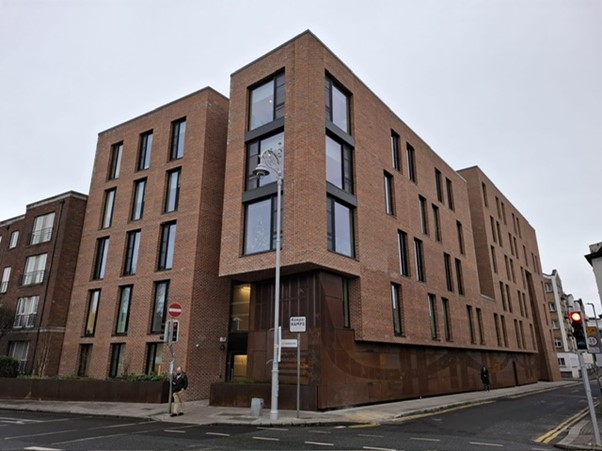
Architect Kate O’Hea from O’Connell Mahon Architects, was part of a team that designed the new Residential Treatment Centre for Dublin Simon Community – a 100-bed facility designed to support recovery with calm, dignity, and connection.
In a city grappling with homelessness and addiction, this building sets a new standard for what thoughtful, inclusive architecture can look like. We spoke to Kate to learn more about the process, the constraints, and what this project means to her.
What was the original brief for the project, and how did the concept evolve over time?
“The initial brief was for demolition and full redevelopment of the existing Dublin Simon Community (DSC) site at Ushers Island to allow expansion of the services offered. The site held a collection of disjointed two- and three-storey buildings which were no longer fit for purpose and were hindering any possibility of meaningful expansion.
Through discussion and feasibility studies, O’Connell Mahon developed a design for a 70-bed unit around a central courtyard and basement kitchen with attendant living, treatment, and administrative spaces. That design was granted planning permission and later expanded when the DSC acquired the adjacent site on Island Street, which allowed the unit to grow to 100 beds – which is what was subsequently delivered.”
When it comes to design with dignity, what design choices were made to create a sense of calm and dignity for residents?
“Offering single bedroom accommodation was probably the most effective way of achieving a sense of dignity and comfort for the Clients – many of whom have never had their own private space.
In addition, high-quality finishes ensure both longevity and robustness while presenting an elevated environment for both staff and Clients. The colour palette is natural, with concrete-effect linoleum flooring and oak veneer doors and furniture. Corridors are painted warm grey with white ceilings throughout. It was important for us to deliver a mature, contemporary interior that avoided any sense of institution or patronising the Clients.
All rooms, including corridors, have full-height windows offering a continuous connection to the city – avoiding any sense of isolation or containment. There are external terraces at each level, with a large paved courtyard at ground floor level to allow access to the outdoors.”
What were the biggest constraints and how did you work around them?
“The site itself was the biggest constraint – t’s very narrow, as are the streets surrounding it, which made construction and deliveries difficult. The contractor managed all that ably.
Also, because the site is within a conservation area, a condition of planning was to fully investigate for archaeology below the level of the basement before any construction could begin. We needed to work closely with the archaeologist and Dublin City Council to agree a suitable programme of works to satisfy this condition.”
How do you personally feel about being nominated for this award – and what does it say about the role of architecture in social impact?
“I’m delighted that the project has been nominated. Both personally – for all the effort that went in, not just by me but also the team in the office – and also for the Client. Dublin Simon Community provides an essential service to the city on a charitable basis. With this new building, they offer a crucial bridge for the most vulnerable to access healthcare.
Architecture plays an essential role in society – especially in urban environments where it literally frames our daily lives. Good architecture supports and enriches our lives by providing safe, inclusive spaces that we’re happy to spend time in and that reflect our values. The new building for Dublin Simon Community provides a proud and confident home for the Community at the entrance to the city, renewing the urban site and supporting the opportunity for renewal among its Clients.”
What do you wish more people understood about projects like this?
“It may be that developments like this raise concern from neighbours over assumptions about the behaviour and impact of the Client cohort. However, it’s precisely projects like this – for Dublin Simon Community – that directly address the needs of people experiencing or at risk of homelessness and addiction. These are the projects that improve the lives of our communities and nurture stable, sustainable urban environments for all of us to benefit from.”
About Kate O’Hea Kate O’Hea is a senior architect and Associate Director at O’Connell Mahon Architects, with a remarkable track record of leading transformative healthcare and community projects across Ireland. With over 25 years’ experience, Kate has played a central role in shaping some of the country’s most important public buildings – from the award-winning Midland Regional Hospital in Tullamore to the new Residential Treatment Centre for Dublin Simon Community.
A specialist in clinical design and accessibility, she brings precision, empathy, and deep expertise to every project – delivering spaces that serve both function and dignity. Her work is a powerful reminder of how architecture can support wellbeing, inclusion, and social change.